A Look from Researchers – Andréa BOISADAN
On this page :
- How did your background lead you to work on innovation and research topics ?
- How does your research work take shape in practice today ?
- What is your perspective on the role of research and innovation today ?
3 questions to Andréa BOISADAN
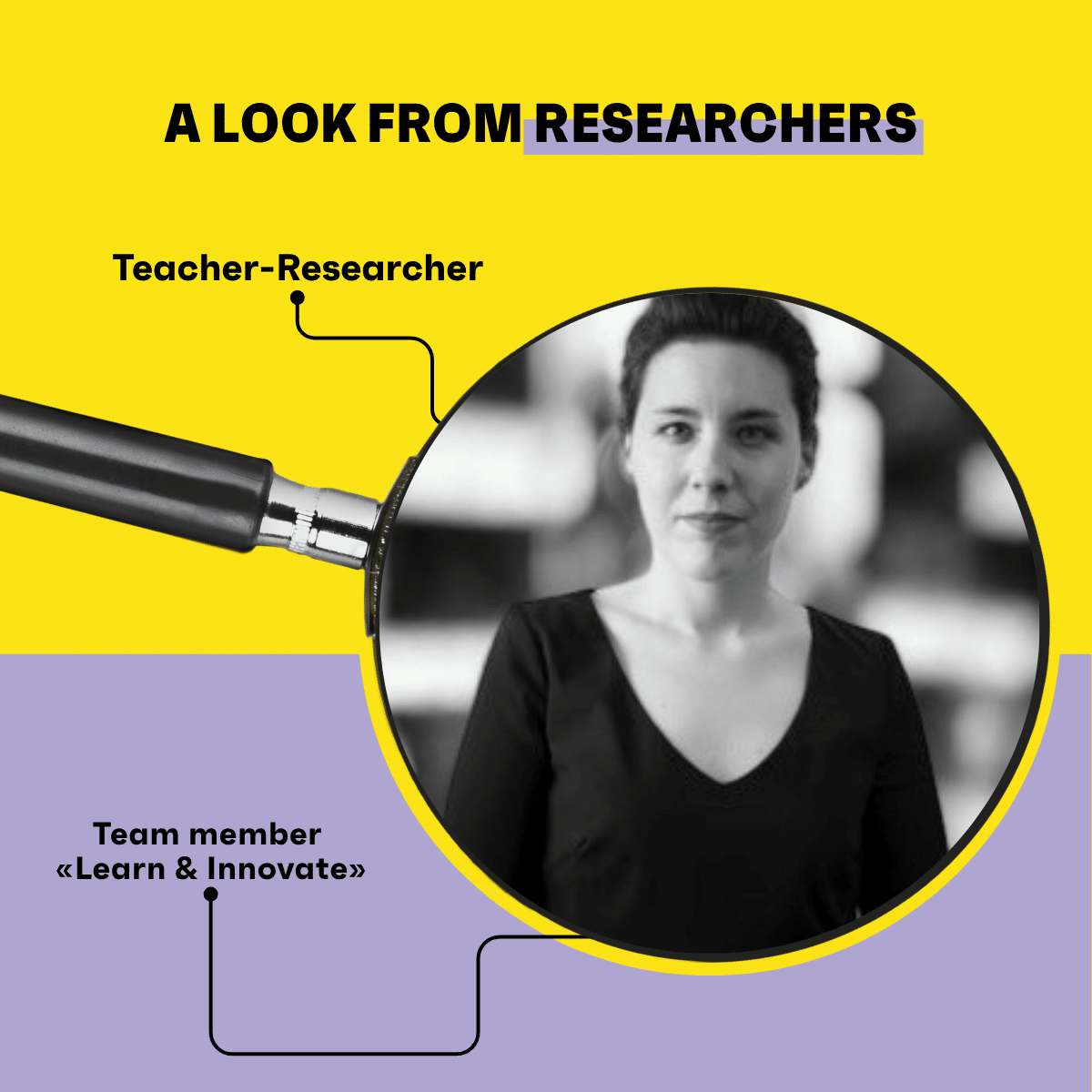
Teacher–Researcher, within the CESI LINEACT research unit and member of the Learning & Innovating team.
Andréa BOISADAN works on the links between innovation, creativity, and human needs. Through her research, she focuses in particular on how innovation can support socio-environmental transitions by designing solutions that are more accessible, inclusive, and sustainable.
How did your background lead you to work on innovation and research topics ?
I have had a fairly straightforward academic path, although at first I was not entirely sure which direction to take. After exploring different options, I eventually turned to psychology, and later to ergonomic psychology at the University of Lorraine.
It was during my second year of undergraduate studies, while attending a course taught by a researcher and lecturer, that I had a real turning point: I realized that this was the career I wanted to pursue.
I then completed a CIFRE doctoral thesis in partnership with a company specialized in tactile transcription of artworks for visually impaired people. My research focused in particular on designing orientation maps accessible to as many users as possible.
This experience gradually led me to integrate innovation and creativity issues into my work, while maintaining a strong human-centered approach. Even today, this vision of innovation designed primarily for people and their needs continues to guide my research within CESI LINEACT.
How does your research work take shape in practice today ?
Today, my research mainly focuses on socio-environmental issues and on how innovation can support ongoing transitions.
In practical terms, this involves several research projects. I am currently working on a doctoral thesis conducted as part of the Mon trajet vert project, which explores the decarbonization of student mobility and the factors that can encourage more sustainable travel practices.
Another project focuses on the accessibility of urban spaces for vulnerable users, particularly visually impaired people. The aim is to design environments that are more inclusive and reassuring for all users.
The core idea remains the same: to think about innovation not only in terms of human uses, but also in relation to current societal and environmental challenges.
Within our team, we also try to question the very purpose of innovation. Today, innovation can no longer focus solely on performance or growth, it must also take into account the societal and environmental impact of the solutions we develop.
What is your perspective on the role of research and innovation today ?
I believe it is essential to maintain a critical perspective on emerging innovations and technologies.
Today, some topics such as artificial intelligence occupy a great deal of space. However, it is important not to follow trends blindly: we must always question the purpose of the tools we develop or use.
I particularly appreciate the idea of “techno-discernment”: asking why a technology is relevant, what real needs it addresses, and what impact it may have on society.
To me, research should above all serve the common good. This requires intellectual curiosity, a constant desire to learn, but also real consistency between the topics we work on and the values we want to uphold.
Andréa’s final thoughts :
I believe it is important to work on subjects that truly matter to us and that genuinely contribute to societal challenges. Research must remain dedicated to serving the common good.
Andréa BOISADAN