A Look from Researchers – Amine BOHI
On this page :
- What motivated you to work on emotional and
affective AI? - What do your current research projects focus
on, and what practical uses can they have ? - How do you see the future of emotion-focused AI
evolving in the coming years ?
3 questions to Amine BOHI
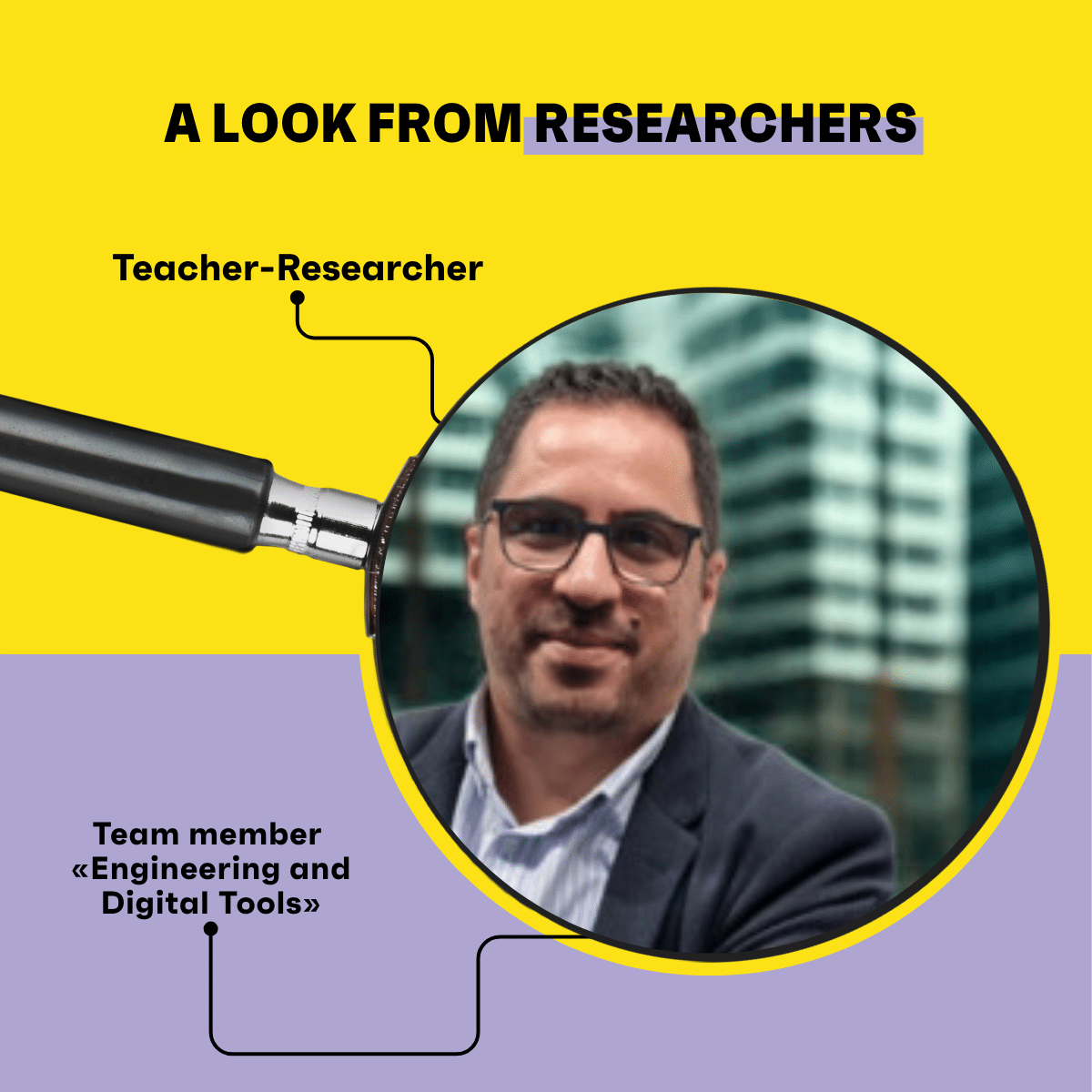
Teacher–Researcher, CESI LINEACT Research Unit and member of the Engineering and Digital tools team at CESI LINEACT.
A teacher-researcher at CESI since October 2022, Amine BOHI is a member of the CESI LINEACT research unit. His work focuses on artificial intelligence applied to the recognition of emotions and affective states. At the crossroads of computer vision, robotics, and healthcare, his research aims to better understand and support people, particularly older adults, in care settings.
What motivated you to work on emotional and
affective AI ?
My background has always been linked to digital technologies applied to healthcare. Before joining CESI, I worked for several years in medical research laboratories, particularly in Marseille, on issues related to pathology and diagnosis.
When I arrived at CESI, I realized that while technology largely focuses on disease itself, the emotional dimensions and overall well-being of individuals were still underexplored. I wanted to turn toward what is known as salutogenesis — that is, everything that contributes to comfort, well-being, and quality of life for patients.
Emotional AI emerged naturally, as it makes it possible to work with populations who sometimes struggle to express their emotions, such as older adults with neurodegenerative diseases. It is a topic that makes sense both scientifically and humanly.
What do your current research projects focus
on and what practical uses can they have ?
My research focuses on developing artificial intelligence models capable of detecting and recognizing affective states such as emotions, stress, or pain, primarily using visual data such as images and videos. We also explore multimodal approaches that combine facial expressions, voice, and body movements in order to improve the robustness and reliability of these systems.
One of the research directions we explore involves taking visual context into account in addition to facial expressions. The face alone is not always sufficient to accurately interpret an emotion: the environment in which a person is located plays an important role, but it can also introduce bias. We are therefore working on approaches that leverage contextual information while limiting these biases.
These projects can lead to concrete applications in healthcare, for example in nursing homes. The models we develop can be integrated into interactive systems, such as humanoid robots or adaptive conversational agents, capable of interacting with residents, adapting their behavior based on detected emotional states, and, when necessary, alerting healthcare professionals.
The goal is not to replace caregivers, but to support them by easing certain repetitive tasks and facilitating the identification of situations that require special attention.
How do you see the future of emotion-focused AI
evolving in the coming years ?
I believe that AI applied to emotions and affective states will play an increasingly important role, particularly in care and support environments. In facilities such as nursing homes, these technologies can contribute to improved resident care by providing additional indicators to caregiving teams.
However, it is essential to emphasize that these tools should not be designed to replace humans. Their primary role is to support healthcare professionals, enabling them to focus on the most critical situations and on human support, which remains indispensable.
In the medium term, I see these systems evolving toward more refined, more personalized solutions, better integrated into assistive devices always within a framework of responsible AI designed to serve people.
Amine’s advice to future researchers :
Research in artificial intelligence must remain connected to real societal needs and be part of a collective approach, in close collaboration with field professionals.
Amine BOHI
It is under these conditions that we can develop solutions that are useful, relevant, and meaningful.