HDR – Amine BRAHIMA
Dans cette page:
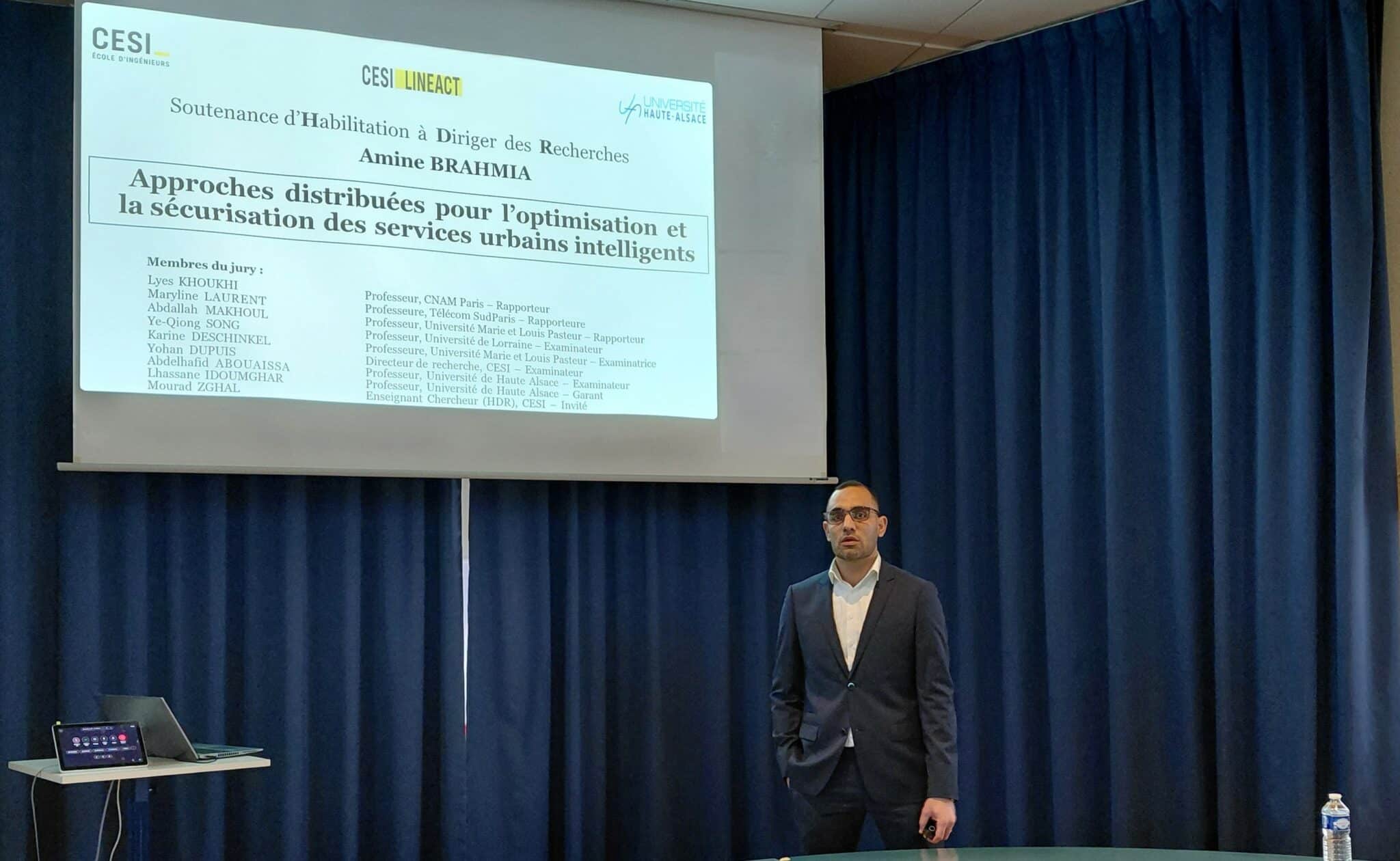
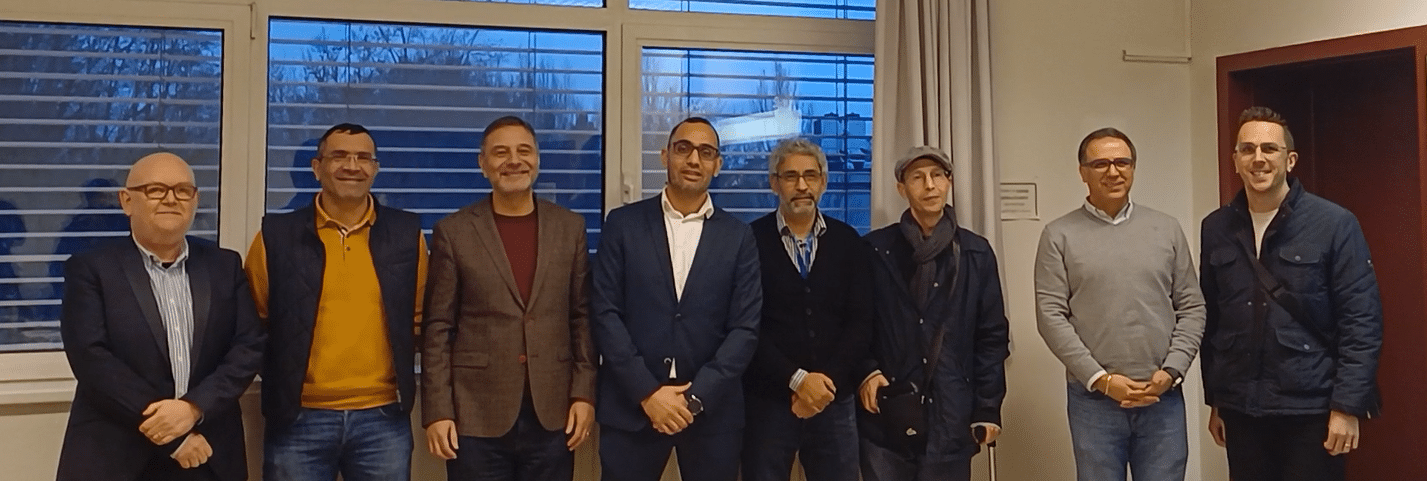
On Wednesday, 11 December 2025, Amine BRAHMIA successfully defended his Habilitation à Diriger des Recherches (HDR) in Computer Science at the University of Haute-Alsace before a highly renowned academic panel. This achievement represents a major milestone in his scientific career and recognizes both the quality and consistency of his contributions.
Topic of interest
Entitled “Distributed Approaches to Optimising and Securing Smart Urban Services,” his work tackles key challenges facing smart cities, particularly the integration and security of cyber-physical systems. In a context marked by increasing urban density, growing environmental pressures and accelerating digital transformation, his research highlights the need for distributed digital infrastructures capable of delivering resilience, adaptability and strong data confidentiality guarantees.
After several years focused primarily on teaching responsibilities and cohort management, Amine BRAHMIA renewed his research activity from the 2020–2021 academic year by reshaping his research agenda. Over the past five years, he has pursued a project aimed at building an end-to-end toolchain to ease the deployment of secure, decentralised smart-city services, from IoT sensor data acquisition through to its exploitation via distributed AI models. This work draws on the interplay between modelling, optimisation, artificial intelligence and cybersecurity to address interoperability and performance requirements in highly heterogeneous urban environments.
Research areas
His earlier contributions were structured around three core themes:
- Optimising sensor deployment in smart buildings;
- Improving the scalability and security of permissioned blockchains in distributed architectures;
- Developing intelligent intrusion-detection approaches for IoT networks.
These research directions have led to original, experimentally validated results.
This HDR also reflects a strong commitment to doctoral supervision, with Amine BRAHMIA having contributed to the supervision of four PhD theses now completed and four currently underway. CESI LINEACT welcomes this academic recognition and the momentum it creates, particularly in terms of doctoral mentoring and the development of new research projects.
We warmly congratulate Amine BRAHMIA and wish him continued success in advancing his work and strengthening collaborations in support of smart urban systems.