ICPR 2026 workshop: Perception, Interaction and Decision-Making for Human Cyber-Physical Systems

In this page:
Join the workshop PIMD4HCPS on Perception, Interaction and Decision-Making for Human Cyber-Physical Systems at ICPR 2026. The workshop focuses on the emerging pipeline that connects synthetic data generation (digital twins, simulation-to-real) with downstream perception and decision-making tasks in robotics, remote sensing, and extended reality environments.
Topics of interest
Topics of interest include, but are not limited to :
- Synthetic data generation and domain adaptation (sim-to-real, Digital Twin).
- Multimodal data fusion and remote sensing.
- 6D pose estimation, semantic segmentation, and scene understanding.
- Active perception (next-best-view, information-theoretic planning).
- SLAM and long-term mapping in dynamic environments.
- Embodied navigation and decision-making.
- Real-time perception and interaction in the Metaverse and eXtended Reality.
Invited keynote speakers
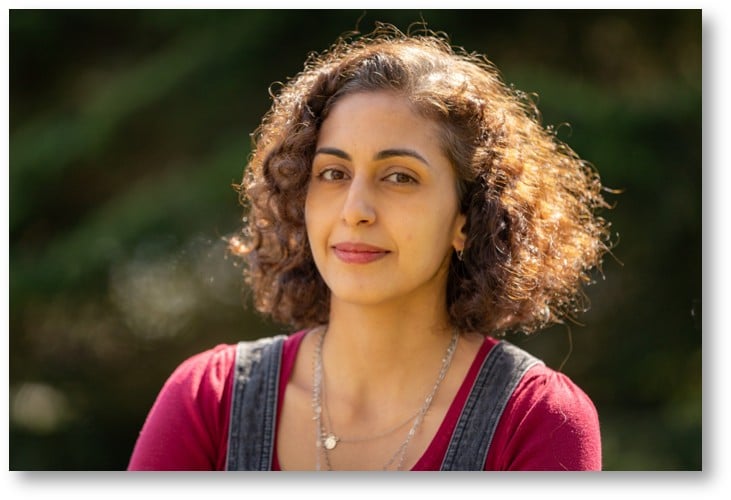
Enjie GHORBEL
is an Assistant Professor at ENSI, University of Manouba, and a member of the CRISTAL laboratory. She is also a Research Fellow with the CVI2 research group at the Interdisciplinary Centre for Security, Reliability and Trust (SnT), University of Luxembourg. Prior to this role, she served as a Research Scientist at CVI2, SnT, University of Luxembourg until 2023. She obtained her Habilitation à Diriger des Recherches (HDR) in 2024 and her PhD in Computer Science in 2017, both from the University of Luxembourg, as well as an engineering diploma from ENISO, University of Sousse, in 2014. Throughout her career, she has contributed to the acquisition and implementation of several national, international, and industrial research projects. Her research interests lie in computer vision and pattern recognition, with applications including human action recognition, deepfake detection, and pose estimation.
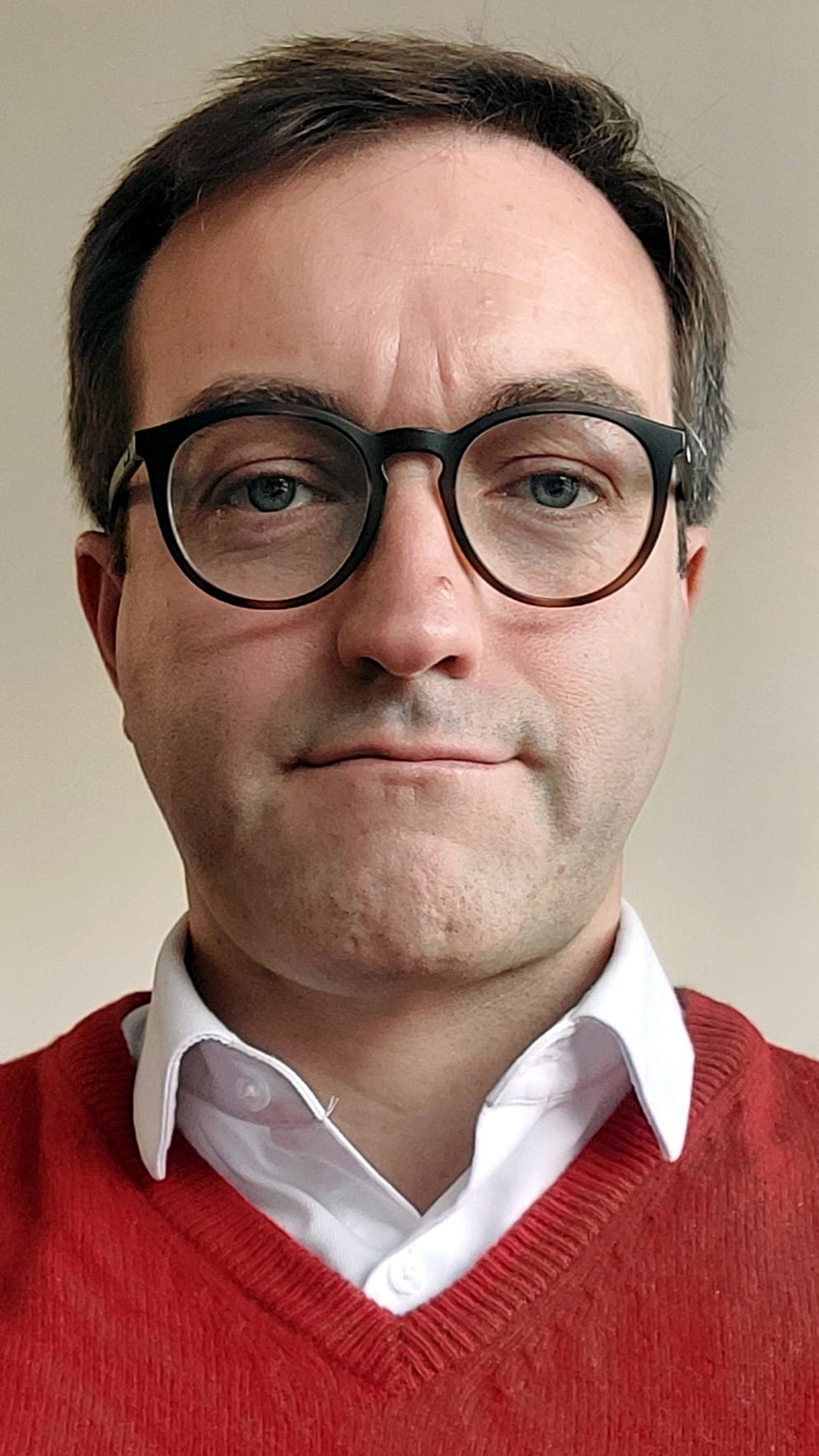
Guillaume CARON
received the Ph.D. in Robotics and the Habilitation degree (HDR) from the University of Picardie Jules Verne (UPJV) in Amiens, France in 2010 and 2019, respectively. He has been an Associate Professor at UPJV since 2011 and has been on secondment to CNRS at the Joint Robotics Laboratory (JRL) CNRS-AIST, IRL, Japan, since 2019. He has served as Co-Director of JRL since 2022. He has been an Associate Editor of the IEEE Robotics and Automation Letters since 2023. He has also been serving as Vice-Chair of the IAPR TC 19 on Computer Vision for Cultural Heritage Applications since 2025 after having been Chair from 2018 to 2022 (two terms). His research focuses on computer vision for robotics, real-time visual tracking and visual servoing, and digital heritage.
Information about the workshop
Workshop schedule
- Will be held on Saturday, August 22nd, 2026
| Schedules | Schedule for the day |
|---|---|
| 8:00 – 8:05 | Welcome and Opening workshop ceremony by the organizing committee |
| 8:05 – 8:50 | Oral session 1 |
| 8:50 – 9:35 | Oral session 2 |
| 9:35 – 10:15 | Coffee break and Poster session |
| 10:15 – 11:15 | Keynote speaker – Enjie Ghorbel |
| 11:15 – 12:00 | Oral session 3 |
| 12:00 – 12:55 | Lunch Break |
| 12:55 – 13:55 | Keynote speaker – Guillaume Caron |
| 13:55 – 14:00 | Closing comments |
Organizing committee
- Associate Prof. Dr Nicolas RAGOT (CESI, Franc FRANCE) – Co-general workshop chair.
- Associate Prof. Dr HDR Vincent HAVARD (CESI, FRANCE) – Co-general Workshop chair.
- Assistant Prof. Dr Kristian FENECH (University of Eotvos Lorand University, HUNGARY).
- Associate Prof. Dr Imane ARGUI (CESI, FRANCE), co-program chair.
- Prof. Dr Jean BOSCO (Dedan Kimathi University of Technology, KENYA), co-program chair.
- Assistant Prof. Dr Zia Ud DIN (University of Houston, USA), co-program chair.
- Assistant Prof. Dr Kinam KIM (University of Houston, USA), communication chair.
Important dates
- Paper submission deadline : 17 April, 2026
- Author notification : 29 May, 2026
- Camera-ready paper : 12 June, 2026
- Finalized workshop program : 17 July, 2026
- Workshop : 22 August, 2026
Call for Papers and Reviewing process
Note
Only full papers will be will be published in the Lecture Notes in Computer Science (LNCS) series.
- We invite high-quality submissions in the form of full papers (from 6 to 15 pages maximum), short papers (5 pages maximum), and extended abstracts (2 pages maximum).
- Submissions should present original, unpublished work. Paper submissions will undergo a double-blind review process to ensure high scientific quality and relevance to the workshop themes.
- Each submission will be evaluated by at least two independent reviewers from the program committee, selected for their expertise in pattern recognition, computer vision, and related topics.
- The review criteria will include originality, technical soundness, clarity of presentation, and relevance to the workshop scope.
- Final acceptance decisions will be made by the workshop organizers based on the reviewers’ recommendations and the overall balance of the program. In case of conflicting reviews, the organizers will request a meta-review to support the final.
- Accepted papers will be presented in oral or poster sessions during the workshop,
- If the paper exceeds 15 pages including references, extra fees will be charged : 150€ for each additional page.
- Authors are invited to submit their paper(s) in LNCS format available on the ICPR 2026 website.
- Papers must be submitted in PDF format, using the following Microsoft CMT* link: https://cmt3.research.microsoft.com/PIDMHCPS2026
*The Microsoft CMT service was used for managing the peer-reviewing process for this conference. This service was provided for free by Microsoft and they bore all expenses, including costs for Azure cloud services as well as for software development and support.
Registration
Infos
Workshop registration will be handled by ICPR 2026 main conference committee. Please follow ICPR 2026 website for related information. Accepted papers must have the presenting author registered.
Contact
For any information, please contact :
- Nicolas Ragot: nragot@cesi.fr
- Kristian Fenech: fenech@inf.elte.hu
- Vincent Havard: vhavard@cesi.fr
