A Look from Researchers – MOURCHID Youssef
On this page :
- Can you tell us about your research field and what drives your passion on a daily basis ?
- What current challenges do you find most urgent or stimulating in your field ?
- How do you think your work can drive change, on a small or large scale ?
3 questions to MOURCHID Youssef
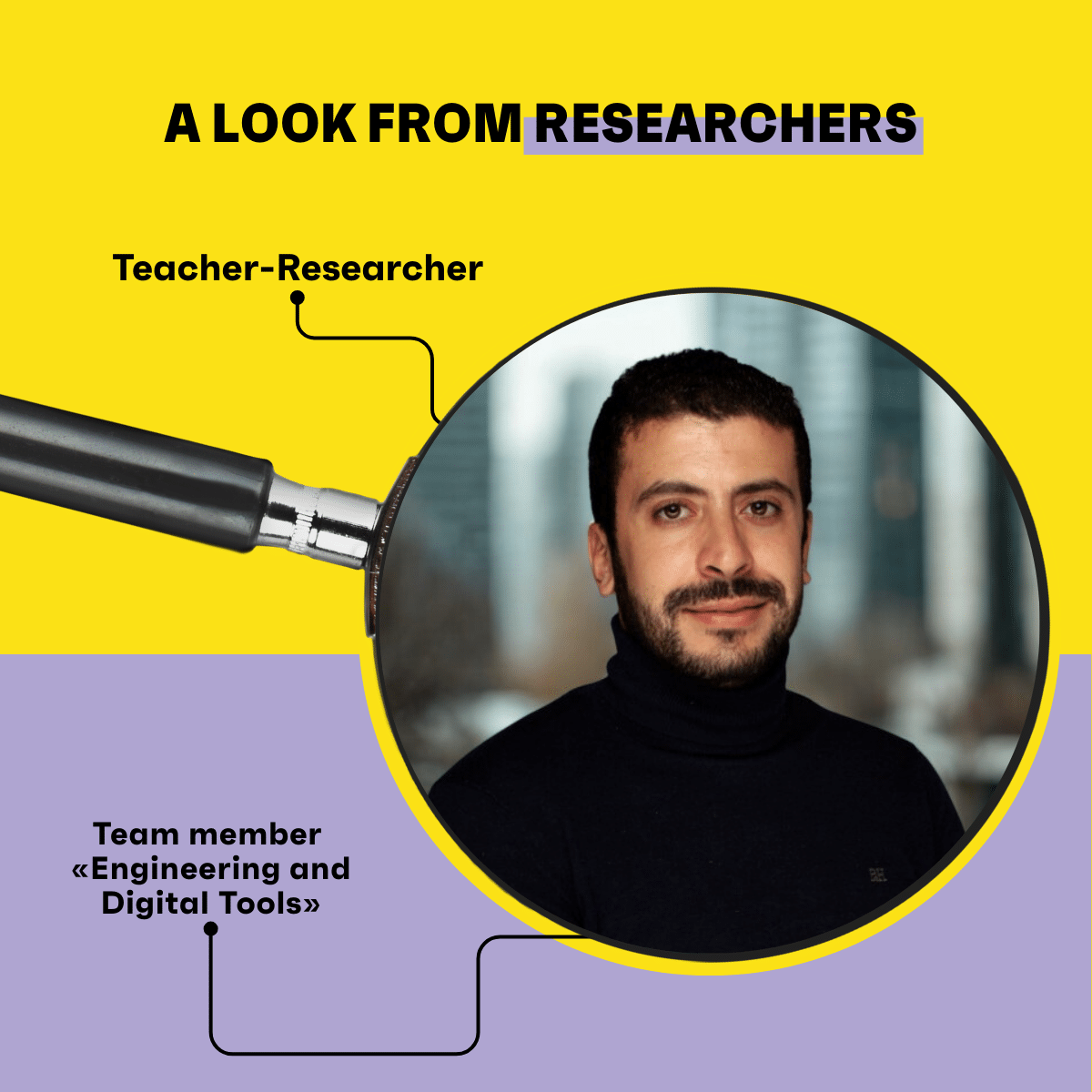
Teacher–Researcher, CESI LINEACT Research Unit and member of the Engineering and Digital tools team at CESI LINEACT.
A teacher-researcher within the CESI LINEACT research unit, Youssef MOURCHID conducts research at the intersection of artificial intelligence and healthcare. His work focuses more specifically on human movement analysis and the development of technological solutions aimed at improving access to care, patient monitoring, and the prevention of certain pathologies, including in low-resource settings.
Can you tell us about your research field and what drives your passion on a daily basis ?
My research activities revolve around integrating artificial intelligence into the healthcare domain. In particular, I explore how technology can help us better understand human movement and facilitate access to care.
What truly motivates me is seeing how AI can be transformed into concrete tools with real-world impact: helping a therapist monitor a patient’s progress remotely, enabling early detection of movement disorders, or designing cost-effective solutions for neonatal screening in resource-limited regions.
Each project involves complex algorithms, but always with a clear objective: improving individuals’ daily lives and overall experience.
What current challenges do you find most urgent or stimulating in your field ?
Several major challenges are particularly stimulating today:
- Going beyond numbers: Providing a score or prediction is not enough. The challenge lies in delivering interpretable information that can guide medical decisions, motivate patients, and support healthcare professionals in making better choices.
- Trust and reliability: AI systems must be fair, transparent, and accurate, regardless of patients or clinical contexts. It is essential to develop solutions that clinicians and patients can truly trust.
- Accessibility and integration: To be useful, technology must seamlessly integrate into existing care practices whether in hospitals, rehabilitation centers, or patients’ homes.
How do you think your work can drive change, on a small or large scale ?
On a small scale, my work can empower patients for example, by facilitating home-based rehabilitation through reliable feedback, or by enabling earlier detection of certain conditions using simple, accessible tests.
On a larger scale, I see artificial intelligence as a lever for more equitable healthcare. It can help deliver high-quality rehabilitation support beyond traditional medical facilities and enable the development of affordable, non-invasive screening solutions for vulnerable populations around the world.
Youssef ’s advice to future researchers :
Place humans at the heart of your research. Technology is powerful, but its true impact emerges when it addresses real human needs.
MOURCHID Youssef